The Rise of Spatial Computing in 2026: Beyond Virtual Reality
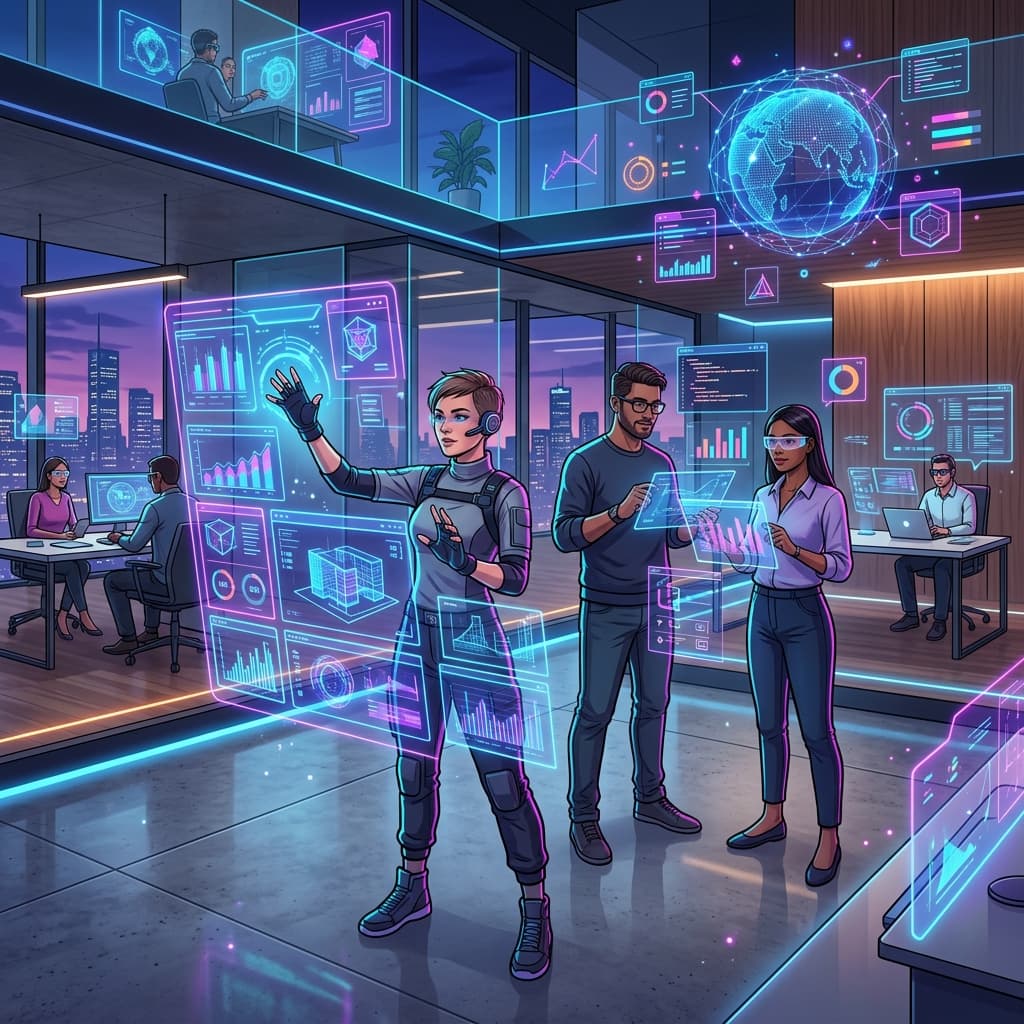
The world of technology has moved far beyond the clunky virtual reality headsets of the past. In 2026, Spatial Computing has emerged as the definitive successor to traditional screen-based interfaces, seamlessly blending the digital and physical worlds.
What is Spatial Computing?
Unlike virtual reality (VR), which fully immerses you in a closed digital environment, spatial computing integrates digital elements into your physical surroundings. Using advanced sensors, LiDAR, and high-resolution pass-through cameras, devices can understand the physical geometry of your room and place digital objects precisely within it.
The Modern Workspace Revolution
The biggest impact of spatial computing has been felt in the modern workspace. The traditional multi-monitor setup is rapidly becoming obsolete.
Instead, professionals are utilizing infinite digital canvases. You can pin a web browser to the wall next to your desk, leave a 3D architectural model hovering above your coffee table, and participate in a life-size holographic video conference with colleagues from around the world.
Key Benefits for Productivity:
- Infinite Screen Real Estate: Unrestricted by physical monitor sizes.
- Contextual Information: Digital manuals or tutorials overlay directly onto physical objects or machinery.
- Enhanced Collaboration: Co-workers feel as if they are in the exact same room, sharing and manipulating 3D data in real-time.
The Hardware Maturation
By 2026, the hardware required for spatial computing has become lighter, more efficient, and significantly more affordable. The heavy, tethered headsets of the early 2020s have evolved into sleek, comfortable glasses that can be worn for hours without fatigue. Battery life has doubled, and custom silicon chips have drastically reduced latency, eliminating the motion sickness that once plagued early adopters.
A Seamless Digital Future
As we look ahead, spatial computing is set to become as ubiquitous as the smartphone. It represents a fundamental shift in how we interact with technology—moving from looking at screens to living within digital experiences.