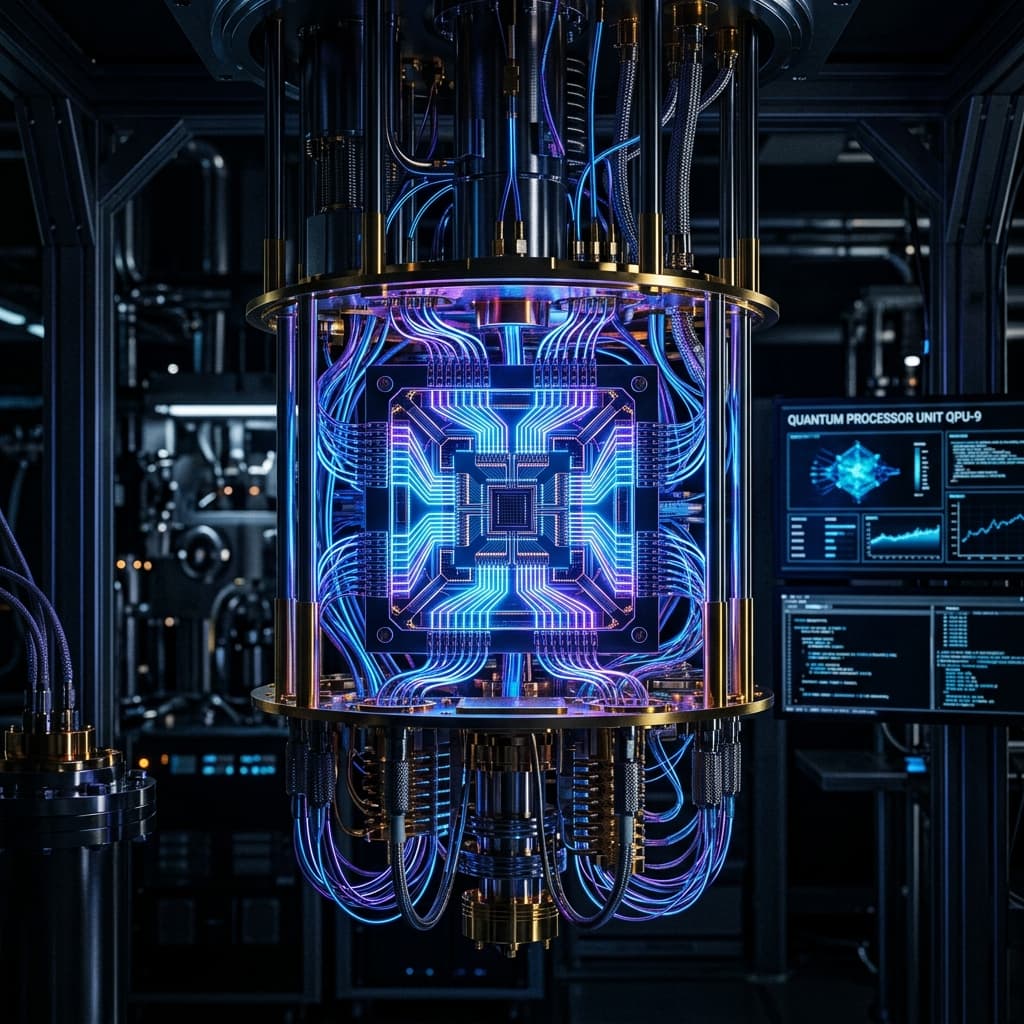
The Quantum Internet: How It Will Change Global Communication
The internet as we know it has transformed society, but it relies on classical physics. Enter the Quantum Internet, a theoretical and rapidly developing network that uses the principles of quantum mechanics to transmit data. Unlike the classical internet which uses bits (0s and 1s), the quantum internet uses qubits, which can exist as 0, 1, or both simultaneously thanks to superposition.
Unbreakable Security: The Power of Quantum Entanglement
One of the most profound benefits of a quantum internet is Quantum Key Distribution (QKD). By utilizing quantum entanglement—a phenomenon where particles remain connected regardless of distance—data transmission becomes theoretically unhackable.
- Eavesdropping is impossible: Any attempt to intercept a quantum message alters its state, immediately alerting the sender and receiver.
- Future-proofing data: As classical encryption falls to future quantum computers, QKD will provide the ultimate defense for national security, healthcare data, and financial institutions.
Applications Beyond Security
While security is a massive draw, the quantum internet will enable applications we can barely imagine today.
- Blind Quantum Computing: Users can access powerful quantum computers over the network without revealing their data or algorithms to the computer provider, ensuring total privacy.
- Ultra-precise Synchronization: Global clock synchronization for GPS navigation and high-frequency financial trading will reach unprecedented levels of accuracy.
- Distributed Quantum Computing: Linking multiple small quantum computers together to solve problems too complex for any single machine, like climate modeling and drug discovery.
The Road Ahead: Challenges and Timelines
Building a global quantum internet is not without its hurdles. Quantum states are incredibly fragile and degrade rapidly over long distances in fiber optic cables. Scientists are currently developing Quantum Repeaters to extend the range of these delicate signals.
"The transition to a quantum internet won't happen overnight. It will likely coexist with our current infrastructure, handling highly sensitive transactions while the classical web handles everyday tasks."
Frequently Asked Questions (FAQ)
Q: Will the quantum internet replace the regular internet? A: No, it will likely run parallel to it. You won't use the quantum internet to stream movies, but rather to send highly secure data or run complex scientific simulations.
Q: When will it be available? A: Localized quantum networks are already being tested in major cities. A true global quantum internet is still decades away, but foundational nodes will likely emerge by the 2030s.